General Description
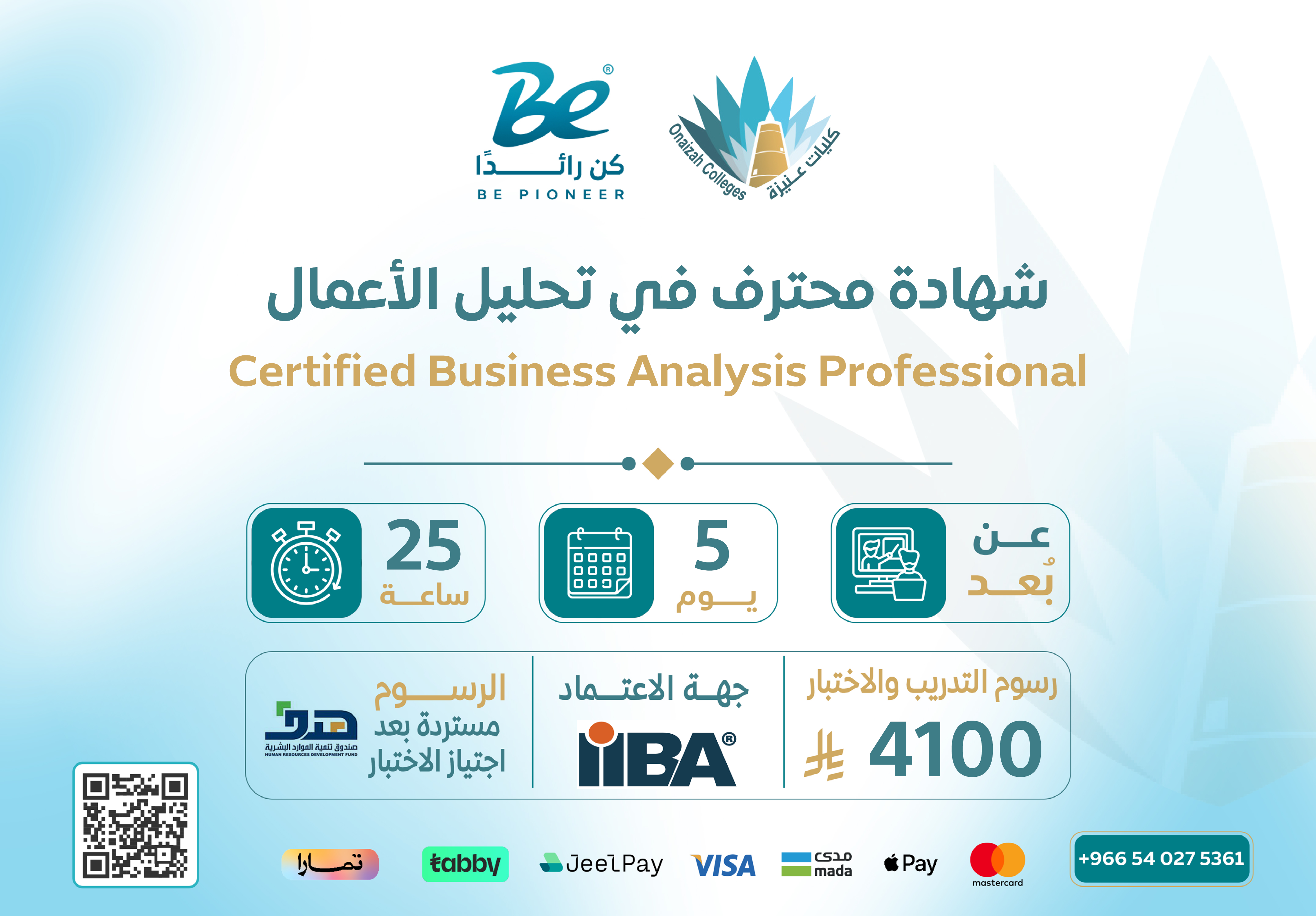
The PMI-PBA (Professional in Business Analysis) certification is a specialized professional credential focused on business analysis. It aims to enable professionals to work effectively with stakeholders, identify business needs, define requirements, and align project outcomes with organizational goals and expected business value.
Offered through the “Be Pioneer” platform for training programs and professional certifications in collaboration with Onaizah Colleges, this certification provides a structured professional pathway for individuals interested in business analysis and requirements development. The content is based on PMI’s core domains, including needs assessment, planning, analysis, traceability & monitoring, and evaluation. These domains form the practical framework for professional business analysis practices.
This certification is suitable for anyone seeking to strengthen their ability to understand stakeholder needs, translate them into clear requirements, and support project success through structured and data-driven decision-making.
The Goals
-
- Provide advanced professional understanding of the role of business analysis in project and program success.
- Develop the ability to identify business needs and align them with goals and expected outcomes.
- Enhance skills in gathering, analyzing, and documenting requirements systematically.
- Improve stakeholder engagement and expectation management.
- Build applied knowledge of PMI-PBA domains from planning to evaluation.
- Prepare learners to operate effectively in analysis-driven business environments.
Target Auidence
-
- Business analysts seeking professional certification and career development.
- Project managers and coordinators involved in requirements management.
- Business development and process improvement professionals.
- Professionals in transformation, quality, and governance roles.
- Individuals involved in requirements gathering and stakeholder communication.
- Experienced practitioners aiming for PMI-recognized certification.
The Features
-
- Dedicated focus on business analysis as a professional specialization.
- Strong emphasis on stakeholder management and requirements definition.
- Based on a structured PMI framework for business analysis practices.
- Enhances skills in requirements, traceability, and evaluation.
- Strong professional value in CVs and career profiles.
- Globally recognized PMI affiliation increases professional credibility.
Topics
1) Needs Assessment
Focuses on understanding the current situation, identifying problems or opportunities, and linking business needs with organizational goals and expected value.
2) Planning
Covers planning business analysis activities, defining methodologies, communication strategies, and managing requirements throughout the project lifecycle.
3) Analysis
Focuses on gathering, analyzing, validating, and documenting requirements, identifying gaps, and producing actionable analytical outputs to support decision-making.
4) Traceability & Monitoring
Covers tracking requirements throughout the project lifecycle, managing changes, and ensuring alignment with business objectives and updates.
5) Evaluation
Focuses on assessing solution performance, measuring business value achievement, and identifying improvement opportunities after implementation.
Learning outcomes
-
- Understand PMI-PBA framework and core business analysis domains.
- Analyze business needs in a structured and goal-oriented way.
- Improve skills in requirements gathering and documentation.
- Enhance stakeholder communication and expectation management.
- Apply planning, analysis, and monitoring techniques in projects.
- Evaluate solutions and measure business value effectively.
- Increase readiness for business analysis and project-related roles.
- Strengthen career profile with a PMI-recognized certification.
Requirements And Conditions
- Basic background in business administration, systems analysis, or project management is preferred.
- General understanding of business processes and organizational environments.
- Good analytical, logical thinking, and problem-solving skills.
- Ability to use computer tools such as Word and Excel.
- Basic communication skills for stakeholder interaction.
- Commitment to attending the training and completing practical tasks.